EV Jack Pads: The Tiny Accessory That Saves Your $20,000 Battery
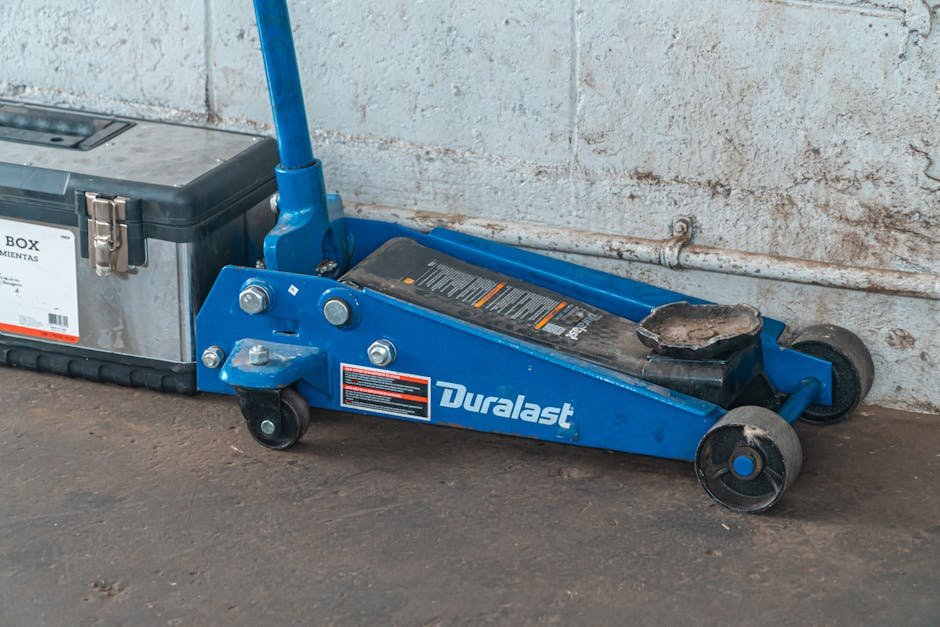
Most car owners don’t think twice about jacking up their vehicle to change a tire or inspect the brakes. But if you own an EV, specifically a Tesla, Rivian, or Lucid, your traditional floor jack is a “ticking time bomb” for your wallet. Why? Because directly behind the thin metal of your car’s rocker panels sits a high-voltage battery pack worth anywhere from $15,000 to $25,000. One slip of a standard jack, and you’ve just totaled your car.
I’m Alex Reynolds, with 15 years of experience in vehicle electronics and EV infrastructure. At BestEVAccessories.com, our “Safety-First” vetting process starts with the basics. Today, I’m talking about EV jack pads. They are simple, cheap rubber pucks, but they are arguably the most important accessory you can own.
The Engineering Nightmare: Why EVs are Different
In a gasoline car, the chassis is built with sturdy frame rails where you can place a jack almost anywhere. In an EV, the entire floor of the car is the battery. Manufacturers leave four tiny, specific “lifting points”—usually less than an inch wide—where it is safe to apply pressure. If your jack head is wider than that point (which most are), the edge of the jack will press into the battery casing or the side skirts.
I’ve had cars come into the shop with “mystery” battery coolant leaks. After an inspection, it’s almost always a hairline fracture in the battery housing caused by a tire shop that didn’t use EV jack pads. They thought they were lifting the frame; they were actually crushing the battery cooling manifold. This is why you must carry your own set in the frunk at all times.
[👉 CLICK HERE TO CHECK THE LATEST PRICE ON AMAZON]
What Makes a “Reynolds-Standard” Jack Pad?
Not all rubber pucks are created equal. In 2026, the market is full of cheap, smelly recycled rubber pads that compress too much under the weight of a 5,000-lb EV. Here is what I look for during my technician teardowns:
- Material Density: You want a high-durometer rubber or even polyurethane. It shouldn’t feel like a sponge; it should feel like a solid block.
- The O-Ring Feature: The best jack pads have a small rubber O-ring on the top post. This allows you to “pop” the pad into the car’s hole so it stays there while you maneuver the jack. Without this, you’re trying to balance the pad on the jack while sliding it under a low-clearance car—a recipe for pinched fingers.
- Internal Support: Some premium pads now include a metal core to ensure zero compression under maximum load.
Pros and Cons: Jack Pad Kits
| Feature | Pros | Cons |
|---|---|---|
| Safety | Zero risk of battery casing puncture or side-skirt cracking. | One more thing to remember to bring to the tire shop. |
| Ease of Use | O-ring design keeps the pad in place during lifting. | Requires a flat-head jack; doesn’t work well with “scissor” jacks. |
[👉 CLICK HERE TO CHECK THE LATEST PRICE ON AMAZON]
Technician’s Warning: Don’t Trust the Tire Shop
Even the biggest tire chains often don’t have EV-specific pads. Their technicians are trained on high-volume gas cars. When you go in for a rotation, hand them your jack pads. Tell them, “Use these, or don’t touch the car.” I’ve seen $20,000 warranty claims denied because the battery damage was clearly caused by an external impact—in this case, an improper lift. A $35 investment is your primary insurance policy against professional negligence.
Frequently Asked Questions (FAQ)
1. Can’t I just use a block of wood?
No! Wood can split or slip under the 5,000+ lb weight of an EV. You need the grip and specific fitment of a dedicated rubber jack pad.
2. Why do I need a set of four?
Most professional lifts use four contact points simultaneously. If you only have one pad, the shop will use their metal arms on the other three points, potentially damaging your car.
3. Do they work for all Tesla models?
Most pads fit the S, 3, X, and Y, but always check the post diameter. The Highland Model 3 and Cybertruck have specific requirements.
4. How do I store them?
Most kits come with a mesh bag or a hard case. Store them in your sub-trunk or frunk so they are always with the car in case of a roadside flat.
5. Are aluminum jack pads better than rubber?
Aluminum is stronger, but I prefer rubber because it has more “bite” and won’t scratch the paint inside the lifting hole, preventing long-term corrosion.
Your battery is the heart of your EV. Don’t let a simple tire change break it. Do you carry a set of jack pads in your car? If not, what’s stopping you? Let’s talk about it in the comments.