The Hidden Fire Risks of Cheap EV Adapters: A Technician’s 2026 Warning
You see them every time you browse Amazon: sleek-looking EV adapters with thousands of five-star reviews and a price tag that seems too good to be true. When you’ve already spent a significant amount on a new electric vehicle, saving $100 on a charging adapter feels like a win. But as a technician who has spent over 15 years under the hoods and inside the electrical systems of high-performance vehicles, I’m here to tell you that “bargain” might be the most expensive mistake you ever make.
The EV market is currently flooded with cheap, uncertified clones that pose serious fire risks to your home and your vehicle. At BestEVAccessories.com, we cut through that noise because we know that a “best-seller” badge on a marketplace doesn’t always mean it’s a “best-performer” in your garage.
Why “Uncertified” Means “Unsafe”
When we talk about safety in the EV world, two acronyms carry all the weight: UL (Underwriters Laboratories) and ****ETL (Intertek)**. These aren’t just fancy stickers; they are proof that a product has undergone rigorous, third-party testing for thermal stability and electrical integrity. Every product we review is strictly vetted for these certifications to ensure your charging setup meets North American safety codes.
Most of the generic adapters you find for under $40 lack these certifications. To hit that low price point, manufacturers often cut corners in three deadly areas:
1. Poor Cable Gauge Quality Every adapter is analyzed by our team for cable gauge quality. Charging an EV pushes high-amperage loads for hours. If the internal wiring is too thin, it creates massive electrical resistance, which leads to overheating.
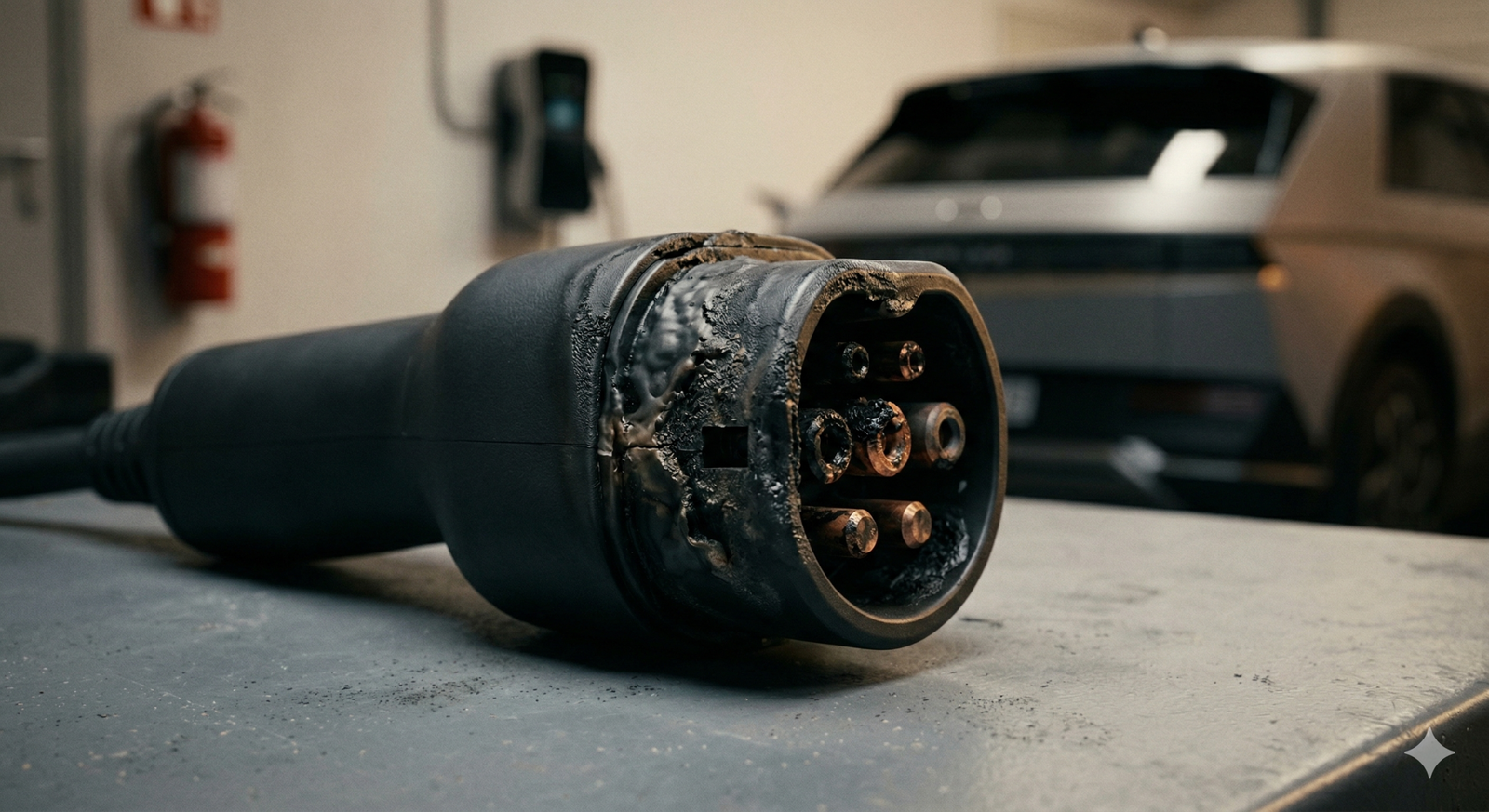
2. Inadequate Heat Dissipation We test how these units handle heat under high-amperage loads. High-quality adapters use materials designed for thermal stability. Cheap clones often use flammable plastics that melt or ignite once a small electrical arc occurs.
3. Real-World Durability Failures Our rankings are updated for 2026 based on thousands of hours of field testing. We’ve seen uncertified adapters fail after just a few months because their internal connections couldn’t handle the physical stress of daily plugging and unplugging.
Certified vs. Uncertified EV Adapters: The Breakdown
| Feature | UL/ETL Certified Adapters | Cheap Uncertified Clones |
| Fire Safety | Tested for thermal stability and flame resistance. | High risk of melting or ignition. |
| Build Quality | High-grade cable gauge and thick insulation. | Thin internal wiring to save costs. |
| Warranty Support | Usually backed by a 1-3 year manufacturer warranty. | Little to no support if the product fails. |
| Vehicle Safety | Protects your EV’s expensive onboard charger. | Can damage vehicle ports and void warranties. |
| Price | Higher initial cost (e.g., $110+). | “Bargain” prices (under $50). |
Recommended Safety-First Gear for 2026
If you want to expand your charging options without turning your garage into a hazard zone, stick to vetted industry leaders that we have personally tested.
Lectron Tesla to J1772 Adapter This is one of the most trusted adapters in the EV community for reliability and speed. It supports up to 48A charging and is specifically designed to access Tesla or NACS chargers for your non-Tesla vehicle. It has been vetted for the exact thermal stability we demand.
Tesla Mobile Connector Bundle (Official) For Tesla owners, there is no substitute for the official gear. This bundle is the gold standard for portable charging, including 220-volt and 110-volt adapters that meet every strict safety requirement.
The Technician’s Final Word
My advice is simple: Never let a $30 piece of plastic be the middleman between your home’s electrical grid and your vehicle’s battery. We prioritize safety-first vetting because we’ve seen the damage that uncertified gear can do. Protect your investment, protect your family, and always choose gear that has been analyzed for real-world durability.
Frequently Asked Questions (FAQ)
These certifications ensure that your charging setup meets North American safety codes. Without them, there is no guarantee the device can handle the heat generated during a high-amperage charging session.
No. We don’t just find the best-sellers; we find the best-performers. Many best-selling items are flooded with cheap, uncertified clones that pose serious fire risks to your home.
Yes. Every adapter and charger is analyzed by certified technician Alex Reynolds, who has over 15 years of experience in vehicle electronics and infrastructure
Look for discoloration of the plastic, a “burnt” smell, or excessive heat during charging. We strictly prioritize products with superior heat dissipation to prevent these issues.
Absolutely. We recommend UL-listed options like the JuiceBox 32A Smart EV Charger or the Tesla Mobile Connector Bundle, which are verified for user reliability and safety
.