Garage Spaghetti: Why Your EV Charging Cable is a Fire Hazard Waiting to Happen
Look, I’ve seen it a thousand times. You spend sixty grand on a shiny new Tesla, a Rivian, or an Ioniq, and then you treat the most expensive “fuel hose” you’ve ever owned like a piece of trash. I’m talking about that charging cable lying on your garage floor. It’s sitting there in a pile of dust, getting stepped on, or worse, getting rolled over by your front left tire when you’re pulling in after a long shift. That’s not just messy—it’s dangerous.
I’m Alex Reynolds. I’ve spent fifteen years elbows-deep in vehicle diagnostics and EV infrastructure. I’ve seen melted charging ports, scorched connectors, and garage fires that started because someone thought a “tangle of spaghetti” on the floor was an acceptable storage solution. At BestEVAccessories.com, we don’t do “pretty” accessories. We do hardware that keeps your house from burning down. Today, we’re talking about why you need an EV Charger Holder Wall Mount. Specifically, I’m looking at the Heavy-Duty J-Hook Cable Organizer. If you think this is just about tidying up, you’re dead wrong. It’s about electrical integrity and thermal safety.
The Invisible Killer: Why Floor Storage is Financial Suicide
Let’s get technical for a second. Your EV pulls serious juice—often 32 to 48 amps—for hours on end. That cable isn’t just an extension cord. It’s a precision-engineered conduit. When you leave that cable on the floor, you’re inviting three major killers into your garage: moisture, physical trauma, and “pin oxidation.”
First, let’s talk about the pins. Inside that J1772 or NACS connector are silver-plated copper contacts. When that nozzle sits on the floor, it picks up ambient moisture and garage dust. Over time, that creates a layer of oxidation. Next time you plug in, that microscopic layer of gunk creates electrical resistance. Resistance creates heat. Heat melts plastic. I’ve had customers come into the shop with a charger literally fused to their car’s inlet. That’s a three-thousand-dollar repair because you didn’t want to spend twenty bucks on a hook.
Then there’s the “internal fatigue.” Copper is flexible, but it has a memory. Every time you step on that cable or twist it into a tight, messy knot on the floor, you’re creating micro-fractures in the copper strands. This increases the load on the remaining strands, leading to a hot spot. A hot spot in a cable carrying 240 volts for eight hours is how you end up on the evening news. An EV Charger Holder Wall Mount keeps the cable in a wide, healthy loop, preserving the internal wire structure for years.
[👉 CLICK HERE TO CHECK THE LATEST PRICE ON AMAZON]
Warning Signs Your Cable is Already Dying
Before you even bolt a Heavy-Duty J-Hook Cable Organizer to your wall, you need to check if you’ve already toasted your current setup. Grab your charging handle. Look at the pins. Are they bright silver? Or do they look dark, burnt, or greenish? If they aren’t shiny, you’ve got oxidation. This isn’t just a cosmetic issue. Oxidation acts like a dam in a river—it slows down the current and creates turbulence. In electrical terms, that turbulence is heat.
Feel the cable about six inches back from the handle while it’s charging. Is it warm? That’s normal. Is it “I can’t hold this for ten seconds” hot? That’s a sign of internal strand failure. Another big one is the smell. If your garage starts smelling like a burnt hair dryer or ozone when the car is charging, shut it down immediately. That’s the smell of plastic beginning to delaminate under thermal stress. By hanging your cable on an EV Charger Holder Wall Mount, you’re giving the cable air to breathe and preventing the “heat soak” that happens when it’s coiled in a pile on the floor.
The Technician’s Solution: Heavy-Duty J-Hook Cable Organizer
If you want my professional opinion, the Heavy-Duty J-Hook Cable Organizer is the gold standard for a simple reason: simplicity. I’ve seen motorized reels and complex retractors fail in six months. In a high-voltage environment, you want fewer failure points. A solid J-Hook made of high-grade ABS or reinforced steel doesn’t have moving parts to break. It just works.
Pros and Cons: J-Hook Style Mounts
| Feature | Pros | Cons |
|---|---|---|
| Durability | No moving parts. Handles extreme cold and heat without cracking. | Requires drilling into a wall or stud. |
| Safety | Keeps the nozzle at eye level, away from floor moisture and bugs. | Needs enough wall space for a wide cable loop. |
| Price | Cheapest insurance policy you’ll ever buy for your EV. | Basic models don’t always include the nozzle holster. |
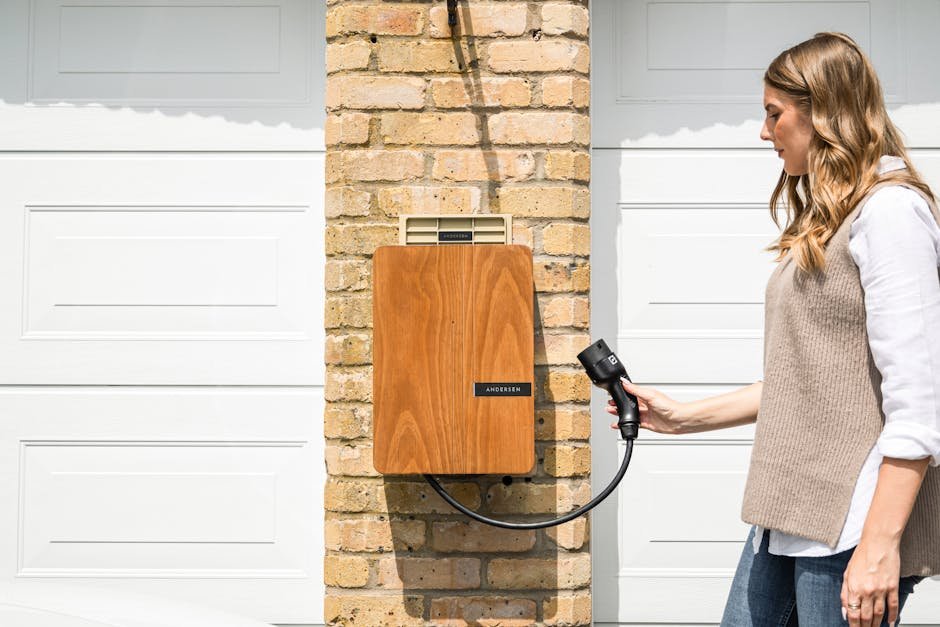
When you use a proper EV Charger Holder Wall Mount, you’re doing more than organizing. You’re ensuring that the weight of the cable isn’t pulling down on the wall outlet or the charger’s internal circuitry. Gravity is a constant force. A hanging cable creates leverage that can pull a NEMA 14-50 plug halfway out of its socket over time. That air gap in the plug is a prime spot for an electrical arc. I’ve had to replace entire garage sub-panels because a heavy cable pulled an outlet loose and caused a fire.
[👉 CLICK HERE TO CHECK THE LATEST PRICE ON AMAZON]
Technician’s Installation Guide: Doing It Right
Don’t just grab a screwdriver and some plastic drywall anchors. This cable weighs ten to fifteen pounds, and you’re going to be yanking on it every day. Do it once. Do it right. Follow these steps like you’re in my shop:
- Find the Stud: Use a stud finder. Do not trust drywall anchors for this. You want the screws biting into a 2×4. If you miss the stud, that hook will eventually rip out, dropping your connector onto the concrete and potentially cracking the plastic casing.
- Standard Height: Mount the hook about 48 inches from the floor. This is the “sweet spot.” It’s high enough to keep the cable clear of the floor but low enough that you aren’t fighting gravity to wrap it up every evening.
- The Nozzle Holster: If your kit comes with a separate holster for the nozzle, mount it slightly to the side of the J-Hook. You want the nozzle to “click” in. If it doesn’t click, it’s not secure, and dust will find its way into those pins.
- The “Drip Loop”: This is the pro secret. Leave a little bit of slack between the charger unit and the wall mount. If you ever have a leak in your garage or heavy condensation, water will travel down the cable. A drip loop makes the water fall off onto the floor instead of running straight into your expensive electronics.
The “Safety-First” Warning: Why We Only Talk UL/ETL
Listen to me closely. The internet is full of “budget” chargers and uncertified plastic hooks. I don’t care how many five-star reviews a no-name charger has. If it doesn’t have a UL (Underwriters Laboratories) or ETL (Intertek) stamp, it has no place in your home. These certifications mean the device has been torture-tested for thermal runaway. It means the components won’t catch fire after ten thousand hours of high-amperage use.
A toaster runs for two minutes. Your car pulls maximum amperage for eight to ten hours. That is a massive thermal load. Uncertified gear uses cheap solder and thin traces that fail under that kind of stress. If your current setup is looking sketchy because it’s been living on the floor, it’s time to stop gambling. Upgrade to something like the JuiceBox 32A Level 2 Charger. It’s UL-listed and built like a tank. If you’re still using a J1772 charger for a Tesla, grab a Lectron J1772 Adapter. Just make sure it’s a high-quality one that fits tight. A loose adapter is just another word for a fuse.
Pro Tip: If you’re ready to fix your garage setup, we’re running a limited-time 10% OFF bundle deal at BestEVAccessories.com. Grab a Heavy-Duty J-Hook Cable Organizer and a new charger or adapter together and save some cash while saving your house.
Frequently Asked Questions (FAQ)
1. Does coiling the cable tightly cause heat issues?
Yes. Never wrap your cable like a tight ball of yarn. This creates an “induction coil” effect and traps heat. Use a wide EV Charger Holder Wall Mount to keep the loops at least 10-12 inches wide to ensure air circulation.
2. Can I mount the holder outside?
Only if the product is rated for UV exposure and waterproof. Most ABS plastic hooks are fine, but cheap unvetted ones will become brittle and snap after one summer in the sun. Always look for outdoor-rated hardware.
3. Why does my nozzle feel ‘stuck’ in the holster?
Usually, it’s just grit or bad tolerances. Clean the holster with a damp cloth. If it’s a locking holster, make sure the release button on your handle is fully disengaged before pulling. A tiny bit of silicone spray can also help.
4. Is a J-Hook better than a wrap-around charger body?
I think so. Some chargers let you wrap the cable around the unit itself. I hate that. It puts thermal stress on the charger’s internal components. Keep the cable on a separate mount for better heat dissipation.
5. Will this work with my 25-foot heavy-duty cable?
The Heavy-Duty J-Hook Cable Organizer is designed for the weight of standard and extended cables. Just make sure you’re screwed into a wall stud as I mentioned to handle the extra weight of a 25ft cord.
Your EV is a masterpiece of engineering. Your garage shouldn’t look like a construction site. Get that cable off the floor. Protect those pins. Stop the “garage spaghetti” before it stops your car from charging. Have you ever walked out to your car and found it didn’t charge because the nozzle was full of dirt? Let’s hear your garage horror stories in the comments—I’ve heard plenty, but there’s always a new one that surprises me.