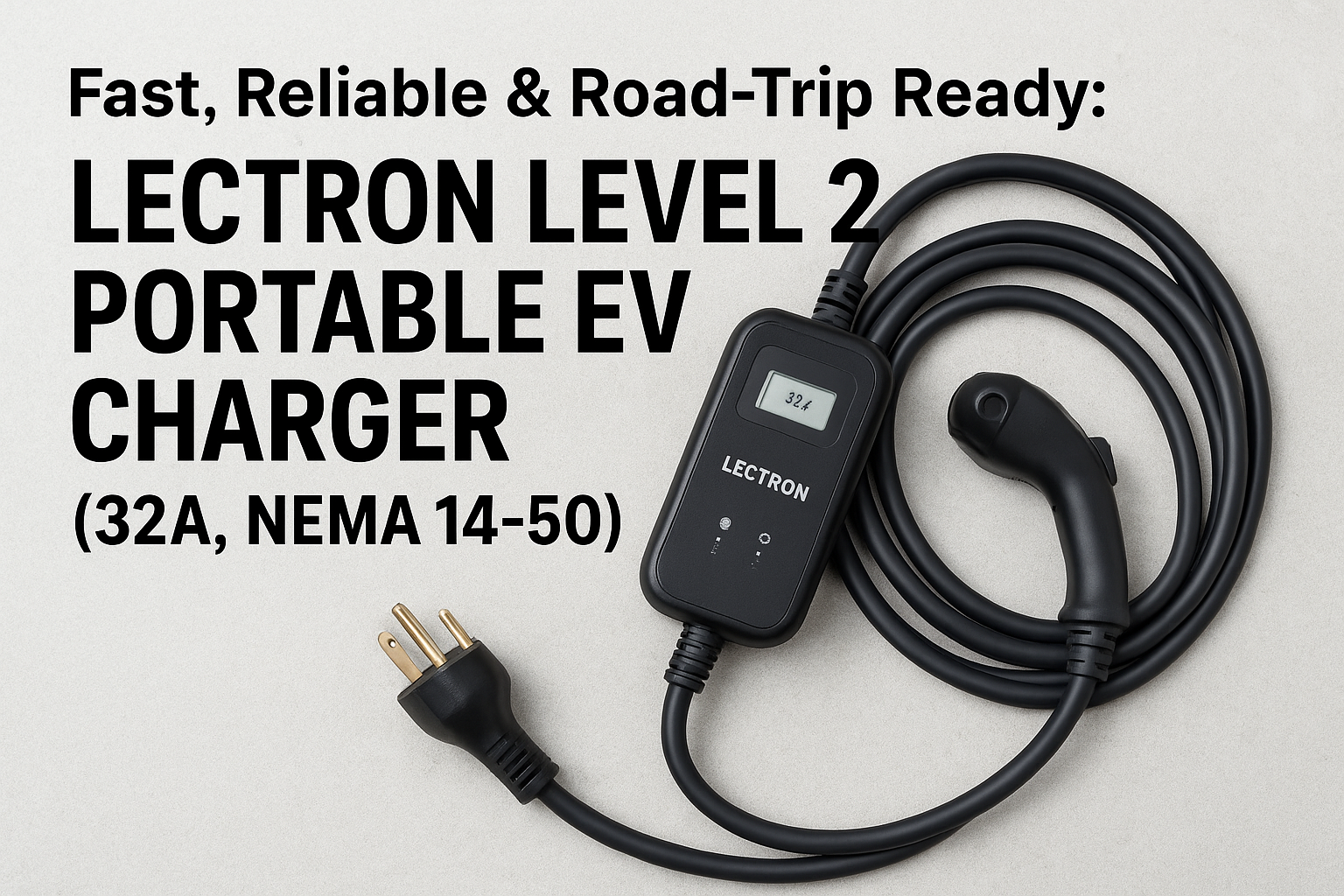
Level 1 vs. Level 2 EV Chargers: When Do You Actually Need to Upgrade?
If you have recently made the switch to an electric vehicle, you are likely familiar with the dreaded “range anxiety.” But for many new EV owners, the real frustration doesn’t happen on the road—it happens in the garage. Waking up to a car that only gained 30 miles of range after being plugged in all night is a harsh reality check. This brings us to the most common debate in the EV community: Level 1 vs Level 2 EV chargers.
Hi, I’m Alex Reynolds, a certified automotive technician with over 15 years of experience specializing in vehicle electronics and EV infrastructure. Here at BestEVAccessories.com, my job is to cut through the marketing noise. The 2026 EV accessory market is unfortunately flooded with cheap, uncertified charging equipment that poses serious fire risks to your home. My goal is to guide you toward safe, reliable, and rigorously tested gear.
Today, we are going completely under the hood to dissect the differences between Level 1 and Level 2 chargers. We will look at charging speeds, installation costs, and, most importantly, help you answer the ultimate question: When do you actually need to upgrade?
Understanding the Basics: What is a Level 1 EV Charger?
When you buy a new electric vehicle, it often comes with a standard charging cable in the trunk. This is your Level 1 charger.
A Level 1 EV charger operates on a standard 120-volt household outlet—the exact same three-prong outlet you use to plug in your television, smartphone charger, or microwave.
The Pros of Level 1 Charging
- Zero Installation Cost: Because it uses a standard 120V wall outlet, there is absolutely no need to hire an electrician. You just plug it in and walk away.
- Portability: Most Level 1 chargers are lightweight and can easily be kept in your trunk for emergencies when you visit friends or family who don’t own an EV.
- Low Initial Cost: If your car didn’t come with one, a replacement Level 1 charger is generally very inexpensive.
The Cons: The “Trickle” Charge
The biggest downside to Level 1 charging is the agonizingly slow speed. Because a standard outlet only provides about 12 to 16 amps of continuous power, a Level 1 charger typically adds only 3 to 5 miles of range per hour.
If you drive a modern EV with a large battery pack, like a Tesla Model Y or a Ford Mustang Mach-E, charging from 10% to 100% on a Level 1 charger can literally take over two full days.
The Upgrade: What is a Level 2 EV Charger?
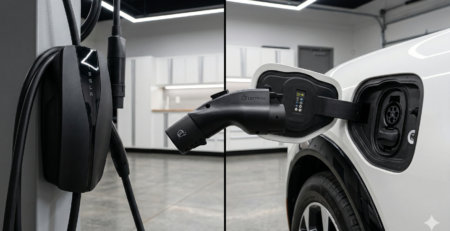
A Level 2 EV charger is the gold standard for home charging setups. Instead of a standard wall outlet, it operates on a 240-volt electrical circuit—similar to the heavy-duty circuits used for large home appliances like an electric oven or a clothes dryer.
The Speed Difference is Staggering
By doubling the voltage and significantly increasing the amperage (typically between 32A and 48A), Level 2 chargers offer exponentially faster speeds. A quality Level 2 setup will add anywhere from 15 to 40+ miles of range per hour.
The Pros of Level 2 Charging
- Overnight Full Charges: No matter how far you drove that day, plugging into a Level 2 charger guarantees you will wake up with a 100% full battery. For instance, high-power 32-amp stations can deliver up to a 6x faster charge compared to standard Level 1 cables.
- Smart Features: Many modern Level 2 chargers come with Wi-Fi connectivity, allowing you to schedule your charging times during off-peak electricity hours to save money on your utility bill.
- Value Addition to Home: Having a dedicated 240V Level 2 charging station is becoming a massive selling point in real estate.
The Cons of Level 2 Charging
- Upfront Costs: You have to purchase the charging unit itself, which can cost several hundred dollars.
- Installation Requirements: Unless you already have a 240V NEMA 14-50 outlet in your garage, you will need to hire a licensed electrician to run a new heavy-duty circuit to your electrical panel.
The Breaking Point: When Do You Actually Need to Upgrade?
So, do you really need to spend the money on a Level 2 EV charger, or is the free Level 1 cable enough? As a technician, here is the checklist I give my clients to determine if an upgrade is absolutely necessary:
1. Your Daily Commute Exceeds 40 Miles If you drive less than 30 miles a day, a Level 1 charger running for 10 hours overnight will easily replenish what you used. However, if your daily commute is 40 miles or more, a Level 1 charger will slowly lose ground. You will start the week at 100%, but by Thursday, you might be down to 30% because the charger simply cannot catch up overnight.
2. You Live in a Cold Climate Lithium-ion EV batteries are notoriously sluggish in freezing temperatures. During deep winters, a Level 1 charger might use almost all of its energy just to keep the battery warm, leaving almost zero power left to actually charge the car. A Level 2 charger has enough power to simultaneously heat the battery and fill it up.
3. You Have a Time-of-Use (TOU) Electricity Plan Many utility companies charge much higher rates for electricity during peak evening hours (e.g., 4 PM to 9 PM) and offer massive discounts after midnight. A Level 1 charger forces you to charge 24/7 to get enough range, meaning you pay peak prices. A Level 2 charger is fast enough that you can schedule it to only pull power between midnight and 6 AM, saving you hundreds of dollars a year.
Technician’s Spotlight: Best Level 2 Upgrades for 2026
If you’ve realized that Level 1 simply isn’t cutting it for your lifestyle, here are two top-tier, rigorously tested options that I personally recommend for a home upgrade:
Option A: The Ultimate Dedicated Home Station
JuiceBox 32A Smart EV Charger If you want a permanent, high-performance wall unit, this is my top pick. This high-power, 32-ampere (7.7 kW) EV charging station offers an up to 6x faster charge than a standard Level 1 plug. It is built for both indoor and outdoor installation and features a highly convenient built-in cable rack and security lock. Most importantly, it is UL listed and ENERGY STAR certified, meaning it passes strict North American safety codes.
👉 CLICK HERE TO CHECK LATEST PRICE ON AMAZON
Option B: The Best Hybrid Solution (For Tesla Owners)
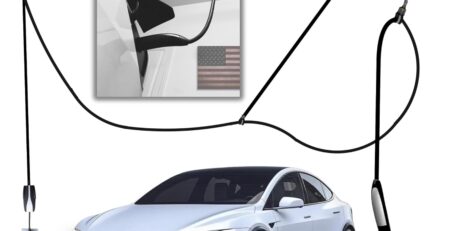
Tesla Mobile Connector Bundle (2025) If you own a Tesla Model 3 or Y and want flexibility, the official Tesla Gen 2 Universal Mobile Connector (UMC) is a brilliant piece of engineering. This bundle includes both a standard 110-Volt adapter (for Level 1) and a 50-Amp 220-Volt NEMA 14-50 plug (for Level 2). You can use it as a Level 2 charger at home, then easily pack it in your trunk for road trips.
👉 CLICK HERE TO CHECK LATEST PRICE ON AMAZON
(Pro Tip: If you drive a non-Tesla but want to use the high-quality Tesla Mobile Connector, you can pair it with a technician-vetted adapter. Check out our shop at BestEVAccessories.com where we offer a 10% OFF limited-time bundle on the Lectron Tesla to J1772 Adapter when paired with Level 2 gear.)
Safety Warning: Don’t Burn Down Your Garage
As an automotive technician who analyzes cable gauge quality and heat dissipation for a living, I cannot stress this enough: Never buy an uncertified EV charger just to save fifty bucks.
Level 2 chargers pull a massive continuous electrical load for hours at a time. The market is full of cheap knock-offs from unknown brands that use thin internal wiring. Under a 32-amp or 40-amp load, these thin wires overheat, melt, and can easily start a garage fire.
At BestEVAccessories.com, our strict vetting process demands that any product we recommend must carry a UL or ETL certification. This certification proves that the device has been put through extreme thermal testing by an independent safety organization and meets strict North American electrical codes. Whether you buy the JuiceBox, the Tesla connector, or another brand, always look for the UL or ETL stamp.
Final Thoughts
The battle of Level 1 vs Level 2 EV chargers ultimately comes down to your driving habits. If you work from home and only drive to the grocery store, Level 1 is perfectly fine. But if you commute daily, deal with winter weather, or simply value the peace of mind of waking up to a 100% full battery every single morning, upgrading to a Level 2 charger is the best investment you can make for your EV.
Stay safe out there, and happy charging!
For more expert reviews and safety guides, be sure to explore our heavily tested recommendations at BestEVAccessories.com