The $20,000 Mistake: Why You Need EV Jack Pads for Every Tire Rotation
I once saw a brand new Model 3 come off a lift with the battery coolant line weeping bright blue fluid. The owner was in tears. The tire shop technician thought he knew what he was doing—he’d been lifting gas cars for twenty years—but he put the floor jack just an inch too far inward. He crushed the battery casing. The car was technically totaled because the battery pack, the heart of the EV, was compromised. That’s the reality of the EV world: you can’t just lift them like a 2005 Corolla.
I’m Alex Reynolds. I’ve seen this exact scenario play out more times than I care to admit. When you own an electric vehicle, you aren’t just an owner; you’re the guardian of a massive, high-voltage energy storage system. A set of EV jack pads isn’t an “accessory.” It’s an essential piece of hardware that acts as a buffer between a metal jack and your car’s most expensive component.
The Battery is a Glass House
If you’ve read my previous guides, like the one on all-weather floor mats or the tips for safe home charging, you know I’m obsessed with the structural health of your car. The bottom of your EV is a solid slab of lithium-ion cells. It’s tough against road debris, but it’s not designed to handle the localized, 3,000-pound pressure of a steel jack head.
Manufacturers designate four tiny, reinforced lifting points. They are about the size of a silver dollar. If your jack hits anywhere outside that point, you’re crushing the plastic side skirts or the battery cooling manifold. A good jack pad—the one I keep in my own frunk—fills that void perfectly, spreading the load across the reinforced chassis point, not the battery skin.
[👉 CLICK HERE TO CHECK THE LATEST PRICE ON AMAZON]
What to Look For: Material and Fitment
Don’t fall for the cheap, hard-plastic pucks. I’ve seen them crack under the weight of a heavy Long Range EV. You want high-durometer rubber or industrial-grade polyurethane. It needs to have enough “give” to grip the jack head but be rigid enough not to compress into a pancake.
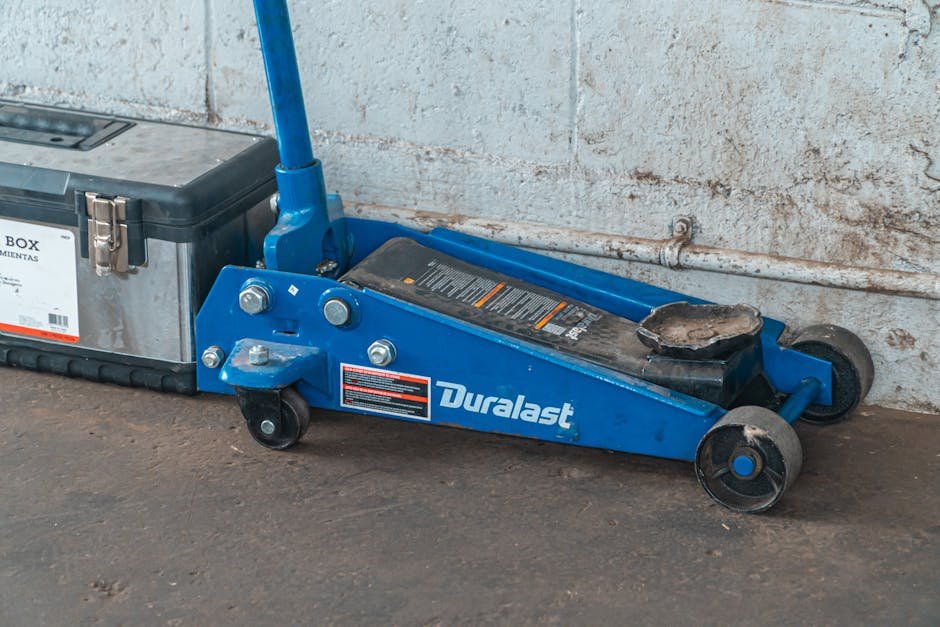
My advice? Always choose a kit that includes an O-ring. It sounds minor, but it makes the difference between a 10-second setup and a 5-minute struggle where you’re trying to balance a rubber puck on a slippery metal jack head while crawling under a low-clearance EV. If you’ve already protected your exterior with mud flaps, you’re halfway there on the protection scale—don’t stop now.
The Shop Floor Rule: Bring Your Own Gear
I don’t care how “reputable” the tire shop is. If they don’t have EV-specific equipment, you are the one who pays the price. I tell my clients: put your jack pads in a mesh bag and keep them in the sub-trunk. When you drop your car off for a rotation, hand the bag to the service advisor and say, ‘Use these, or don’t touch the car.’ If they look at you like you’re crazy, you’re at the wrong shop. Professional shops appreciate customers who know their equipment.
[👉 CLICK HERE TO CHECK THE LATEST PRICE ON AMAZON]
Frequently Asked Questions
Why can’t I just use a standard floor jack?
Standard jacks are designed for steel frame rails. EVs have battery packs covering the entire floor. If your jack head hits the battery casing or cooling lines instead of the designated lift point, you’re looking at a $20,000 repair bill.
Do I need one jack pad or four?
Always carry a set of four. Most professional tire shops need to lift the whole car at once. If you only give them one, they’ll use their metal arms on the other three points and potentially damage your car.
Are aluminum jack pads better than rubber?
Rubber/Polyurethane is better. It has more ‘bite’ and won’t scratch the metal of the lifting point, which prevents long-term corrosion.
How do I store them?
Most kits come with a dedicated mesh bag. Keep them in your frunk or sub-trunk. If they aren’t in the car when you get a flat, they’re useless.
Will they fall out during lifting?
Get a set with a built-in O-ring. That rubber ring creates friction, holding the pad in place while you slide the jack underneath, so you don’t have to balance it manually.
A simple set of pucks could save you thousands. Have you ever had a tire shop struggle to lift your EV, or do you have a shop that gets it? Drop a comment below—let’s share the good shops and warn each other about the bad ones.