Toxic ‘New Car’ Smell: Why Your EV’s Airtight Cabin Needs a Technical Air Scrub
Walk into any Tesla showroom or open the door of a fresh-off-the-line Rivian. That smell? It’s legendary. Most people call it the “new car smell” and associate it with luxury. I call it a chemical cocktail. As a tech who’s spent 15 years breathing in brake dust and battery coolant fumes, I’ve learned the hard way that if you can smell it, your lungs are processing it. Those scents are Volatile Organic Compounds (VOCs)—formaldehyde, benzene, and toluene—bleeding out of the “vegan leather,” the glues in the dashboard, and the flame retardants in the carpet.
I’m Alex Reynolds. I don’t care about “ambient lighting” or “minimalist design” if the air inside the car is making your eyes water on a hot July afternoon. The EV market is currently flooded with cheap, $15 “ionizers” that do nothing but emit a fake ozone scent. They are useless, and some are actually dangerous. My job is to look at the airflow physics and tell you why a real, vetted EV air purifier is the only way to keep your digital cockpit from becoming a sealed chemical chamber.
The Greenhouse Trap: Heat, Glass, and Off-gassing
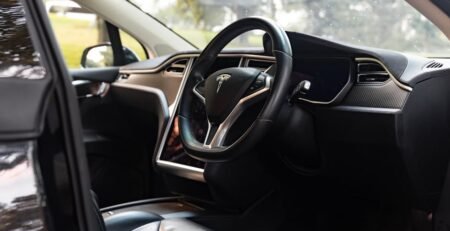
Modern EVs love glass. Huge panoramic roofs are great for the view, but they turn your car into a greenhouse. Even with the best EV sunshades, the interior temperature of a parked car can still skyrocket. When that happens, the chemical off-gassing from the interior plastics accelerates.
I once had a customer, a new Model 3 owner, who complained of headaches every time he drove more than 30 minutes. We checked the car for leaks—nothing. It turned out he had bought a set of unvetted, cheap rubber floor mats that were “sweating” chemicals under the glass roof’s heat. The cabin was airtight, and he was basically huffing plastic fumes. This is the reality of the modern EV cabin; it’s so well-sealed for noise insulation that it also seals in the pollutants.
Material Science: HEPA vs. Carbon vs. The “Scam” Ionizers
If you’re looking for a portable EV air purifier, you need to understand the filter stack. Anything less than a three-stage system is a waste of your cup holder space.
- Pre-filter: Catches the big stuff—dog hair, lint, and the dust you missed with your portable vacuum.
- HEPA (H13 Grade): This is the heart of the system. It traps 99.97% of particles down to 0.3 microns. We’re talking PM2.5, pollen, and even some bacteria.
- Activated Carbon: This is the only layer that handles the VOCs. Carbon “adsorbs” chemicals. Without a thick carbon layer, that “new car smell” will go right through the HEPA filter and back into your nose.
Stay away from anything that claims to “purify” air using only ions. In my testing, many of these uncertified clones produce ozone as a byproduct. Ozone is a lung irritant. You don’t solve a chemical problem by adding a respiratory irritant to the mix. It’s poor engineering and a safety risk.
[👉 CLICK HERE TO CHECK THE LATEST PRICE ON AMAZON]
The Airflow Engineering of a Quiet Cabin
The quietness of an EV is a double-edged sword. Since you don’t have engine noise, you’ll notice the hum of a cheap air purifier immediately. A vetted unit uses brushless DC motors—the same tech found in your car’s cooling fans. These are quiet and can run for thousands of hours without bearing failure.
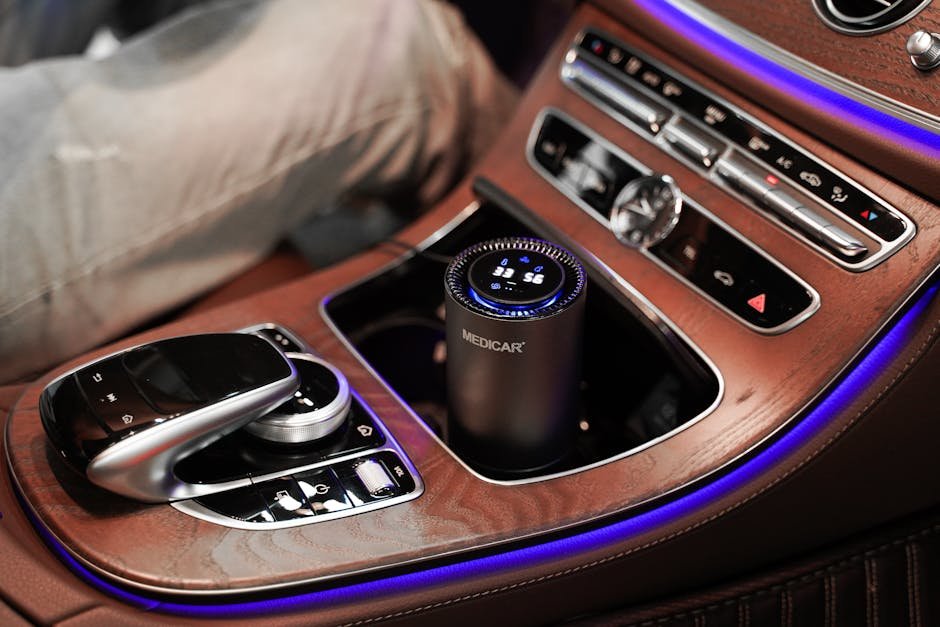
Placement is also key. Don’t just toss it under a seat. Most portables are designed to fit in a cup holder or strap to the back of a headrest. If you’ve organized your interior with center console organizers, you probably have a perfect spot for a compact purifier. You want it where the air can circulate freely, scrubbing the cabin air 4 to 5 times per hour (CADR rating).
Safety First: Power Draw and Certification
Don’t just plug any random device into your 12V or USB-C ports. In 2026, many EVs have moved to 16V lithium accessory batteries. If your purifier has a cheap voltage regulator, it will fry. I’ve seen a burned-out port on a Rivian because the owner used a non-UL listed “air freshener” that shorted out.
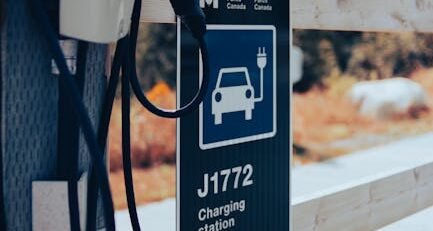
Always check for UL or ETL certifications. This ensures the device won’t overheat while you’re fast charging. Speaking of charging, using a purifier while you’re at a station is the best time to run it on “High” mode. It cleans the air while you’re sitting there, so when you hit the road again, the cabin is fresh.
[👉 CLICK HERE TO CHECK THE LATEST PRICE ON AMAZON]
The Bottom Line: Clean Air is a Performance Upgrade
You spent a lot of money on a car that doesn’t emit tailpipe pollutants. Don’t let the interior emit them instead. A high-quality air purifier is just as important as your seat covers or your screen protector. It’s about maintaining the asset—and in this case, the asset is your health.
Frequently Asked Questions
1. Does my EV already have a built-in air purifier?
Most EVs have a basic cabin air filter. High-end models like the Tesla Model S/X have ‘Bioweapon Defense Mode’ with HEPA, but smaller EVs like the Model 3 or Ioniq 5 benefit significantly from a dedicated portable purifier to scrub VOCs released by interior plastics.
2. Can I leave the air purifier on while the car is parked?
Yes, if your car has a ‘Sentry’ or ‘Camp’ mode that keeps the 12V/16V accessory port active. This is a great way to scrub the air before you get back in.
3. Do ionizers damage EV electronics?
Cheap ionizers can produce ozone, which is bad for your lungs and can degrade sensitive rubber seals over years. Stick to HEPA and Activated Carbon systems for safety.
4. How long do the filters last?
In a car environment, a HEPA filter usually needs replacing every 4-6 months depending on how much you drive and the local air quality.
5. Will a portable purifier drain my main battery?
Not noticeably. Most draw less than 10W. You’d have to leave it running for weeks to see even a 1% drop in your main traction battery.
So, are you still rocking that “new car smell,” or have you already made the switch to a cleaner cabin? Let me know in the comments if you’ve ever felt lightheaded after a long drive in a new car—you might be surprised how common it is. Stay safe and breathe easy!