Taming the Snake: The Ultimate Guide to EV Cable Management and Organizers
If you’ve owned an electric vehicle for more than a week, you know the struggle. You come home, you plug in, and by the next morning, your garage floor looks like it’s been invaded by a giant black snake. Charging cables are heavy, stiff, and—if left on the ground—dangerous. Not only are they a trip hazard for you and your family, but they are also vulnerable to being run over by your own car. And let me tell you, a crushed NACS or J1772 connector is a $500 mistake you don’t want to make.
I’m Alex Reynolds, lead technician at BestEVAccessories.com. I’ve seen everything from melted ports to snapped cables caused by poor storage. Today, we’re talking about EV cable management. It’s not the sexiest accessory, but it’s the one that will save your equipment and your sanity.
The Physics of Cable Stress: Why Coiling Matters
Most EV charging cables are designed to carry high amperage (anywhere from 32A to 48A) for hours at a time. This generates internal heat. When a cable is kinked, twisted, or left in a tangled mess on the cold concrete floor, the internal copper strands can eventually fatigue. In 2026, we are seeing more high-power home stations, and the thicker the cable, the more “memory” it has. If you don’t manage the loop properly, you’re putting mechanical stress on the internal wiring.
I once worked on a customer’s home unit that kept tripping the thermal sensor. The culprit? He was wrapping the cable so tightly around the unit that the heat couldn’t dissipate, and the copper was starting to micro-fracture. A simple wall-mounted J-hook or a cable reel would have prevented the entire issue.
Top Solutions for 2026: Hooks, Holsters, and Retractors
When it comes to EV cable management, you have three primary categories of hardware. As a tech, I have a clear favorite.
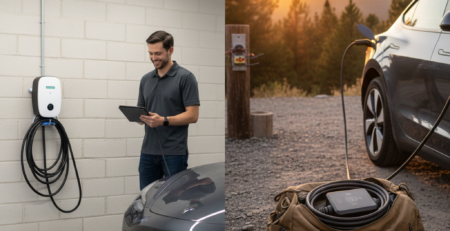
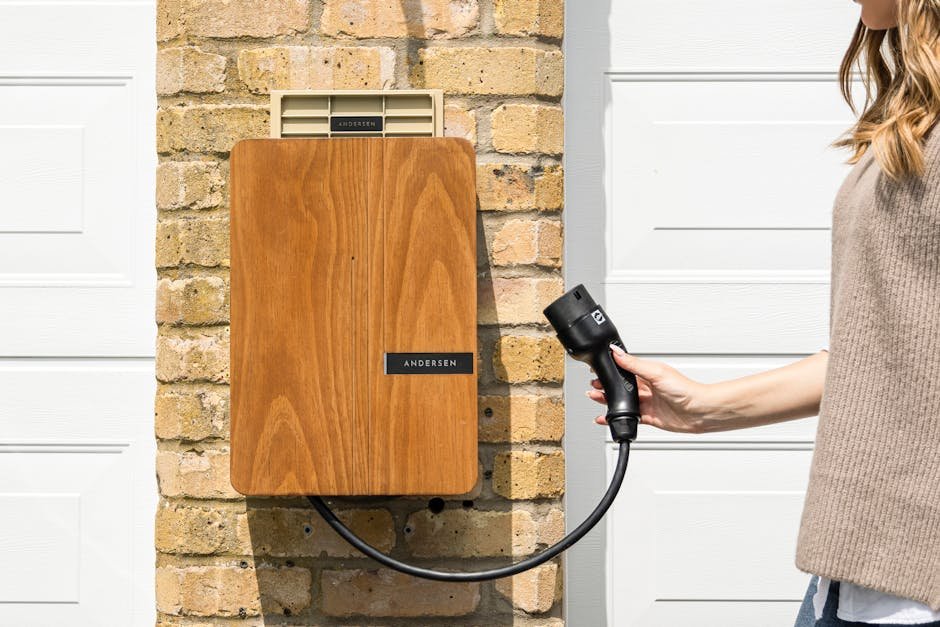
- The Wall-Mounted Holster: This is a must-have. It gives your connector a “home.” Instead of leaving the sensitive plug head dangling or sitting on a dusty shelf, it clicks into a wall-mounted dock. This protects the pins from moisture and spiders (yes, spiders love nesting in J1772 ports).
- Heavy-Duty J-Hooks: Simple, effective, and nearly indestructible. A wide J-hook allows the cable to hang in natural, wide loops. This is the best way to prevent the “kinking” I mentioned earlier.
- Automatic Cable Retractors: These are the “luxury” option. Much like a gas station hose, these pull the cable back up to the ceiling or wall when you’re done. In 2026, these have become very popular for multi-car garages where floor space is at a premium.
[👉 CLICK HERE TO CHECK THE LATEST PRICE ON AMAZON]
Safety Warning: The Danger of the “Floor Drag”
Leaving your cable on the floor isn’t just messy; it’s a safety violation in my book. Garage floors collect grit, salt (in winter), and moisture. Over time, dragging the cable across the concrete wears down the outer insulation. If that insulation thins out, you’re one puddle away from a ground-fault issue. Furthermore, tripping over a cable while carrying groceries can lead to more than just a bruised knee—it can yank the charging port on your car, causing thousands in structural damage to the vehicle’s bodywork.
Pros and Cons: Cable Management Systems
| System | Pros | Cons |
|---|---|---|
| Wall Holsters | Cheap, easy to install, protects pins from debris. | Doesn’t help with the length of the cable. |
| Ceiling Retractors | Keeps floor 100% clear; very high “cool” factor. | Requires drilling into ceiling joists; more expensive. |
[👉 CLICK HERE TO CHECK THE LATEST PRICE ON AMAZON]
Technician’s Installation Tips
When you install your organizers, keep the “Golden Loop” rule in mind. You want the cable to hang in loops no smaller than 12 inches in diameter. Anything tighter than that puts unnecessary tension on the outer jacket. Also, mount your holster at “hip height” (about 4 feet high). This is the most ergonomic position and ensures you aren’t bending over or reaching too high while carrying a heavy 25-foot cable.
Frequently Asked Questions (FAQ)
1. Will any hook work for an EV cable?
No. Standard garden hose hooks are often too sharp and can “pinch” the cable. Always use a hook with a wide, curved surface area analyzed for heavy electrical cables.
2. Why is my cable so stiff in the winter?
The rubber and plastic compounds in the insulation harden in the cold. A good management system is even more important in winter to prevent forced bending which can crack the jacket.
3. Are cable organizers weather-proof?
Most vetted products at BestEVAccessories.com are UV-rated and rust-proofed for outdoor use. Check for stainless steel or high-grade ABS plastic construction.
4. Can a retractor pull too hard on my car’s port?
High-quality retractors have a “stop-lock” mechanism. Once you pull it out, it stays loose until you give it a tug to retract, ensuring zero tension on your car’s charging port.
5. How do I clean my charging cable?
Use a damp microfiber cloth with a mild pH-neutral soap. Never use harsh solvents, as they can degrade the rubber over time.
A tidy garage is a safe garage. How do you manage your charging “snake”? Share your setup in the comments—I’m always looking for clever DIY solutions that meet safety standards!