Garage Safety First: The Ultimate Guide to EV Charging Cable Management
Imagine walking into your high-tech garage, ready to jump into your EV for a morning commute, only to trip over a heavy, tangled black cable snaking across the concrete floor. Or worse, you hear a sickening crunch as you back your three-ton electric SUV over your $500 charging handle. In my 15 years as a certified technician, I’ve seen more damaged charging ports and frayed cables caused by poor storage than by actual electrical surges. Your garage isn’t just a parking spot; it’s a high-voltage refueling station, and it’s time you treated it like one.
I’m Alex Reynolds, the lead expert at BestEVAccessories.com. My “Safety-First” philosophy doesn’t stop at the car’s bumper—it starts at the wall. Today, we are dissecting EV Charging Cable Management. This isn’t just about “tidying up.” We are talking about preventing mechanical stress on your car’s charge port, protecting the delicate pins in your NACS to J1772 adapter, and ensuring your garage doesn’t become a trip-and-fall hazard zone.
The Physics of Cable Fatigue: Why the Floor is the Enemy
Electric vehicle charging cables are thick for a reason. They carry 32 to 48 amps of continuous current for hours on end. This generates heat, and heat makes the rubber insulation more pliable. When a cable is left tangled or coiled tightly on the floor, it develops “mechanical memory.” Over time, the internal copper strands can stretch or micro-fracture. If you’ve ever wondered why your charger starts throwing “Ground Fault” errors, the culprit is often a damaged internal wire caused by being stepped on or crushed by a tire.
Furthermore, leaving the charging handle on the floor exposes the connector pins to dust, moisture, and insects. A single spider web inside a J1772 handle can create enough resistance to trigger a thermal shutdown. A professional EV Charging Cable Management system, like a wall-mounted holster or a ceiling-retractable reel, keeps the cable in a “natural curve.” This minimizes the tension on the internal wiring and ensures that your portable power station or home charger remains at peak efficiency for years.
The $1,200 Garage Slip: A Real-World Case Study
Let me tell you about a customer named James. James is an orthopedic surgeon who bought a luxury EV but didn’t want to “clutter” his wall with a cable organizer. He kept his 25-foot cable coiled loosely on a bag on the floor. One rainy night, James stepped into the garage with wet shoes, slipped on the smooth surface of the cable, and fell. He broke his wrist—ironic for a surgeon—and his car’s charging handle, which he fell on top of, was crushed.
James spent $500 on a new cable and lost weeks of work due to his injury. When he finally called me to help set up his garage properly, we installed a heavy-duty wall mount and a dock. James realized that a $25 EV Charging Cable Management tool could have prevented a five-figure loss in medical bills and repair costs. His mistake was seeing the cable as a passive object. It is a high-voltage extension of your car’s nervous system. James now has a fully organized setup, including trunk organizers for his mobile gear, ensuring nothing is ever left to chance again.
The Technician’s Vetted Choice: Wall Mounts vs. Retractable Reels
In the shop, we categorize cable management into two levels of engineering:
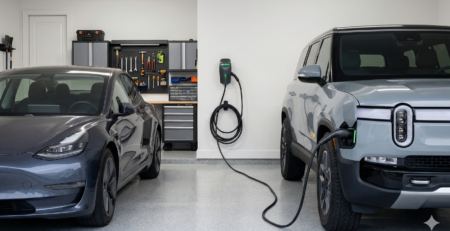
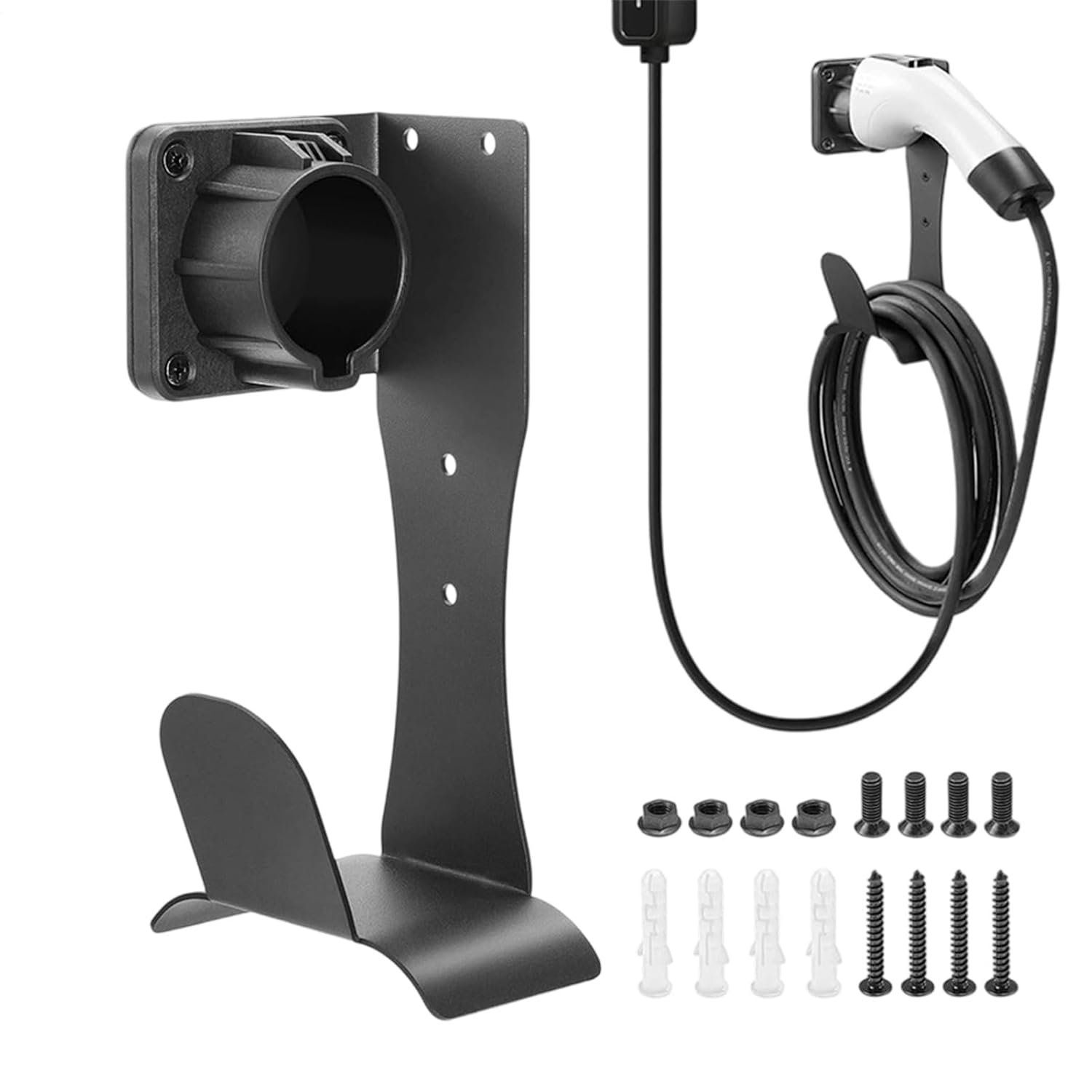
- Wall-Mounted Holsters: These are the most reliable. They feature a heavy-duty J-hook to hold the cable weight and a click-in dock for the handle. I strictly prioritize models with “Anti-Dust” covers. They are perfect for daily drivers who charge in the same spot every night.
- Retractable Ceiling Reels: This is the “Gold Standard” for digital nomads and gadget lovers. Like a vacuum cord, the cable hangs from the ceiling and retracts when not in use. This prevents the cable from ever touching the floor. However, you must ensure the reel is rated for the weight of an EV cable, or you’ll be dealing with a sagging hazard.
[👉 CLICK HERE TO CHECK THE LATEST PRICE ON AMAZON]
Installation Protocol: Setting Up Your Garage Like a Pro
Don’t just screw a hook into the drywall and call it a day. Follow my professional protocol for a fail-safe setup:
- The Height Rule: Mount your cable hook at chest height (about 48-52 inches). This allows for a natural “loop” that doesn’t put tension on the wall outlet or the car’s charge port.
- Stud Finding: EV cables are heavy. Never use drywall anchors. Always screw your EV Charging Cable Management hardware into a wooden wall stud. If you’ve already spent money on under-seat storage bins, you know that quality materials matter.
- The Loop Diameter: Never coil your cable tighter than an 8-inch diameter. Tight coils generate more heat due to induction and can lead to insulation breakdown over time.
- Holster Orientation: Install the holster facing downward. This prevents dust from settling into the pins when the handle is docked.
- Cable Slack: Always leave about 2 feet of “lazy slack” between the wall mount and the car. This prevents the cable from “tugging” on your car’s delicate electronic latches.
Ecosystem Synergy: The Professional EV Garage
Cable management is just the beginning of a professional garage ecosystem. Once your cable is off the floor, you’ll notice how much more space you have. This is the perfect time to organize your other maintenance tools. Keep your portable tire inflator on a nearby shelf and your EV jack pads in their dedicated case right next to the charger.
Furthermore, maintaining a clean floor is easier when the cable is gone. Use your portable EV vacuum to keep the area around your charging station free of grit and metal shavings that could get stuck to the magnetic parts of your charging handle. Every accessory, from door liners to mud flaps, contributes to the longevity of your vehicle, but the charging setup is where the life of your battery truly begins.
The Safety-First Mandate: Preventing Electrical Arcing
Why am I so obsessed with docking the handle? Electrical arcing. If you leave your handle on the floor, the metal pins can oxidize. When you eventually plug that oxidized handle into your car, the electricity has to “jump” across the corrosion. This creates micro-sparks (arcing) that pit the metal and generate localized heat. Over time, this can melt your car’s charging port—a repair that costs upwards of $1,500 and is rarely covered by warranty if “consumer negligence” is found.
A certified EV Charging Cable Management system ensures that the pins stay dry and clean. We talk a lot about HEPA filters for our lungs, but your car needs “clean air” and clean contacts for its high-voltage heart. Don’t be the owner who spends $60,000 on a car but $0 on protecting its lifeline. Invest in a professional storage solution today. It’s the cheapest insurance you’ll ever buy for your home and your car.
Your garage should be a reflection of the technology inside your EV—efficient, clean, and safe. By getting that cable off the floor and into a dedicated holster, you are extending the life of your equipment and protecting your family. It’s a 10-minute install that pays for itself every single day. Have you ever tripped over your charging cable, or are you a pro at garage organization? Share your garage setups in the comments below!